Commercial Epoxy Flooring Chattanooga, TN: floors built for forklifts, kitchens, and daily abuse
Heavy-duty, seamless epoxy systems for Chattanooga facilities, built for forklifts, chemicals, and nonstop traffic.
Estimate call, estimate, and a system recommendation. No obligation.
Who We Serve
What industries do you coat in Chattanooga?
Heavy-duty, seamless epoxy systems for warehouses, auto shops, restaurants, retail, and industrial facilities across Chattanooga. Built for forklift traffic, chemicals, and nonstop foot traffic, without peeling in a year, failed health inspections, or constant repairs.
We regularly install commercial epoxy flooring for Chattanooga-area facilities like:
- Warehouses and distribution centers. Forklift-rated, dust-free systems.
- Manufacturing and industrial facilities. Impact- and chemical-resistant floors.
- Auto repair shops and dealerships. Oil- and chemical-resistant coatings.
- Restaurants and commercial kitchens. Seamless, health-department-friendly, easy-clean.
- Breweries and food and beverage production. Acid- and wash-down-resistant surfaces.
- Retail stores, gyms, and showrooms. High-gloss, decorative, traffic-rated finishes.
- Medical offices, clinics, and labs. Non-porous, disinfectant-tolerant flooring.
Why Commercial Floors Demand a Professional-Grade System
Residential epoxy kits are built for light, climate-controlled garages. Commercial floors in Chattanooga deal with forklifts, spills, impact, and constant traffic. Using the wrong product can mean peeling within a year, OSHA headaches, and lost production time.
Residential epoxy coatings and commercial epoxy coatings are not the same product, and confusing the two is one of the most expensive mistakes a business owner can make. A residential kit bought at a hardware store is designed for a climate-controlled garage that sees one or two car tires per day. A commercial floor may bear forklift traffic, rolling carts, dropped equipment, chemical spills, standing water, and the constant foot traffic of dozens of workers, all before lunch. Commercial-grade epoxy systems use higher-solids formulations, thicker film builds, and often two or three distinct layers designed to work together as a system rather than a single painted-on coating.
Every commercial project should begin with a thorough concrete evaluation. That means checking moisture vapor emission, looking for existing sealers or coatings that could cause adhesion failure, and identifying any cracks, pits, or uneven joints that need to be addressed before a single drop of epoxy goes down. Skipping this step is why so many cheap coatings peel within a year. Proper concrete prep and moisture assessment up front are what keep you from paying twice for the same floor.
How does seamless flooring help food service and medical spaces?
Restaurants, commercial kitchens, food processing facilities, and medical offices throughout Chattanooga and Hamilton County share a critical requirement: a floor that cannot harbor bacteria, mold, or contaminants. Grout lines, tile cracks, and porous concrete are the enemy of a sanitary environment. A properly installed seamless epoxy system eliminates every joint, seam, and gap that microorganisms need to establish a foothold.
For commercial kitchens, we most often specify a quartz broadcast epoxy system. This involves broadcasting dry quartz aggregate into a wet epoxy base coat, then sealing with a chemical-resistant topcoat. The result is a surface that is seamless, non-porous, easy to mop clean, and naturally textured to provide traction even when wet. Health department inspectors consistently cite seamless flooring as one of the top sanitation improvements a food service operation can make. If your kitchen floor currently has tile grout that you are scrubbing on your hands and knees, a quartz epoxy system will change the way you think about cleaning.
Medical offices and clinics benefit from the same seamless, non-porous qualities. A solid epoxy floor resists disinfectant chemicals that would degrade lesser materials, tolerates the weight of heavy equipment without cracking, and presents a clean, professional appearance that patients notice the moment they walk in.
Forklift-Rated Epoxy Flooring for Chattanooga Warehouses
One of the most common questions we receive from warehouse and manufacturing facility managers is whether epoxy can actually hold up under forklift traffic. The short answer is yes, when the right system is specified and installed correctly. Thin, single-coat decorative epoxies are not designed for this environment. Commercial warehouse systems use high-build epoxy base coats many times thicker than a retail kit, sometimes topped with a urethane or polyurea topcoat that adds impact resistance and flexibility under dynamic load.
These systems are built to carry fully loaded forklifts of 8,000 pounds and more, along with pallet jacks, order pickers, and the constant rolling impact of steel-wheeled carts. Properly installed, a high-build floor outlasts the concrete beneath it. It is the concrete that chips, not the coating. If your warehouse floor is currently bare concrete pitted from years of forklift traffic, an epoxy system will seal those pits, restore a level rolling surface, and protect the slab from further deterioration.
Chemical and Oil Resistance for Chattanooga Industrial Settings
Auto repair shops, car dealerships, manufacturing plants, and craft breweries all share one challenge: aggressive liquids hitting the floor daily. Motor oil, transmission fluid, battery acid, cleaning solvents, hop acids, industrial degreasers. These substances stain and eventually degrade unprotected concrete. Once concrete absorbs oil, it becomes a fire hazard and an OSHA liability.
Commercial epoxy systems are formulated to be chemically resistant. Oil and most common shop chemicals bead on the surface rather than soaking in, making cleanup as simple as a mop pass. For facilities that work with particularly aggressive chemicals, we can specify a topcoat with enhanced resistance. Every auto shop floor we install is dramatically easier to keep clean than the bare concrete it replaced, which means techs spend more time turning wrenches and less time scrubbing.
Anti-Slip Aggregate for OSHA Compliance: Every commercial epoxy system we install can include anti-slip broadcast aggregate worked into the topcoat, giving your crew measurable traction even on wet or oily floors. That traction directly supports OSHA slip-and-fall prevention requirements for commercial workplaces, and we document slip-resistance ratings on request if you need them for compliance.
What decorative options suit retail and showroom floors?
Not every commercial floor needs to be purely utilitarian. Retail stores, car dealerships, gyms, and showrooms use their floors as a design element. A clean, polished floor signals quality to every customer who walks through the door. Metallic epoxy systems, flake broadcast systems, and solid-color high-gloss finishes can all be executed in a commercial-grade formulation that looks sharp on opening day and still looks sharp after a year of foot traffic.
Car dealerships in particular benefit from a high-gloss showroom floor that reflects overhead lighting and makes every vehicle on display look better. Gyms and fitness studios often choose rubber-chip or flake systems that are visually interesting, easy to clean, and provide a comfortable feel underfoot. The crew walks you through the available systems on the call so you can see real samples and make an informed decision.
What to Expect on Commercial Pricing
Commercial epoxy flooring is typically priced per square foot, and the rate varies significantly based on the type of system, the condition of the existing concrete, and the scope of prep work required. A basic single-coat warehouse floor on well-prepared concrete sits toward the lower end. A multi-layer quartz system for a commercial kitchen, or a metallic decorative floor for a showroom, sits toward the higher end.
Because concrete condition varies so dramatically from one facility to another, we only give written pricing after we talk the job through by phone. That is how change orders get avoided: we assess the concrete, measure the space accurately, and identify any prep requirements upfront rather than discovering them mid-job.
How much downtime does a commercial install take?
Worried about shutting down operations? Shutting down a production floor or a commercial kitchen for flooring work costs money, so scheduling is part of the conversation from the first call. Phased, section-by-section installation is common for large facilities that cannot take an entire floor offline at once. Foot traffic returns first, then heavy equipment traffic once the coating has cured further. We will give you a realistic curing timeline at your estimate so you can plan operations around it without surprises.
What to Expect: Our Commercial Install Process in Chattanooga
Every commercial floor we install in Chattanooga follows the same disciplined sequence, with no shortcuts on prep, which is where most cheap coatings fail. Here is what the process looks like from your first call to a finished floor:
- Estimate call. The crew visits your facility and evaluates the concrete for moisture and existing coatings, measure the space, and identify prep requirements before putting a single number in writing.
- Written, firm estimate. You get a per-square-foot price with the system spelled out, with no change orders for prep we should have spotted during the inspection.
- Scheduling around your hours. We lock in weekend, overnight, or phased timing so you lose as little operating time as possible.
- Surface preparation. Mechanical diamond grinding removes contaminated surface concrete and opens the slab so the coating bonds tight and stays put.
- System installation. Primer, high-build base coat, broadcast aggregate where needed, and a chemical- or impact-resistant topcoat, built in layers for the demands of your facility.
- Cure and return to service. Foot traffic comes back first, then vehicle and equipment traffic once the coating has cured further. We hand you a clear return-to-service timeline for your system.
Example Project Scenario: Large Distribution Facility
This is a representative example of the type of commercial project we handle regularly. A distribution facility with heavy forklift traffic on bare, pitted concrete is a common starting point. The typical process: mechanical diamond grinding to remove contaminated surface concrete, a moisture-blocking primer, a high-build commercial epoxy base coat, and a urethane topcoat with anti-slip aggregate. Projects of this scale are typically phased across a weekend so operations can resume Monday. The result is a sealed, dust-free surface that holds up under daily forklift loads and is dramatically faster to clean than bare concrete. Contact us to discuss your specific facility.
Example Project Scenario: Commercial Kitchen Floor Replacement
This is a representative example of the food-service work we perform. A commercial kitchen with cracked tile, failing grout, and recurring sanitation issues is a strong candidate for a seamless quartz broadcast system. The typical process: remove existing tile, patch and level the substrate, install a three-coat quartz broadcast system with a food-safe chemical-resistant topcoat. The seamless result eliminates the grout lines where bacteria accumulate. Installations like this are routinely completed overnight so the kitchen can reopen the following day. If your kitchen has a recurring health inspection issue tied to flooring, call us to talk through options.
Service Area
Chattanooga Epoxy Flooring serves commercial and industrial clients throughout the Chattanooga, TN metro area, including downtown Chattanooga, the North Shore, East Brainerd, Hixson, Ooltewah, Signal Mountain, and surrounding Hamilton County communities. We also serve commercial facilities in Bradley County, including Cleveland, TN. If you are searching for a commercial epoxy flooring contractor near Chattanooga, call us. We are happy to discuss your project and schedule a free estimate over the phone.
Ready to stop fighting your floor? Call us at (423) 805-9608 and the crew sets up a free estimate over the phone to give you specific pricing for your space.
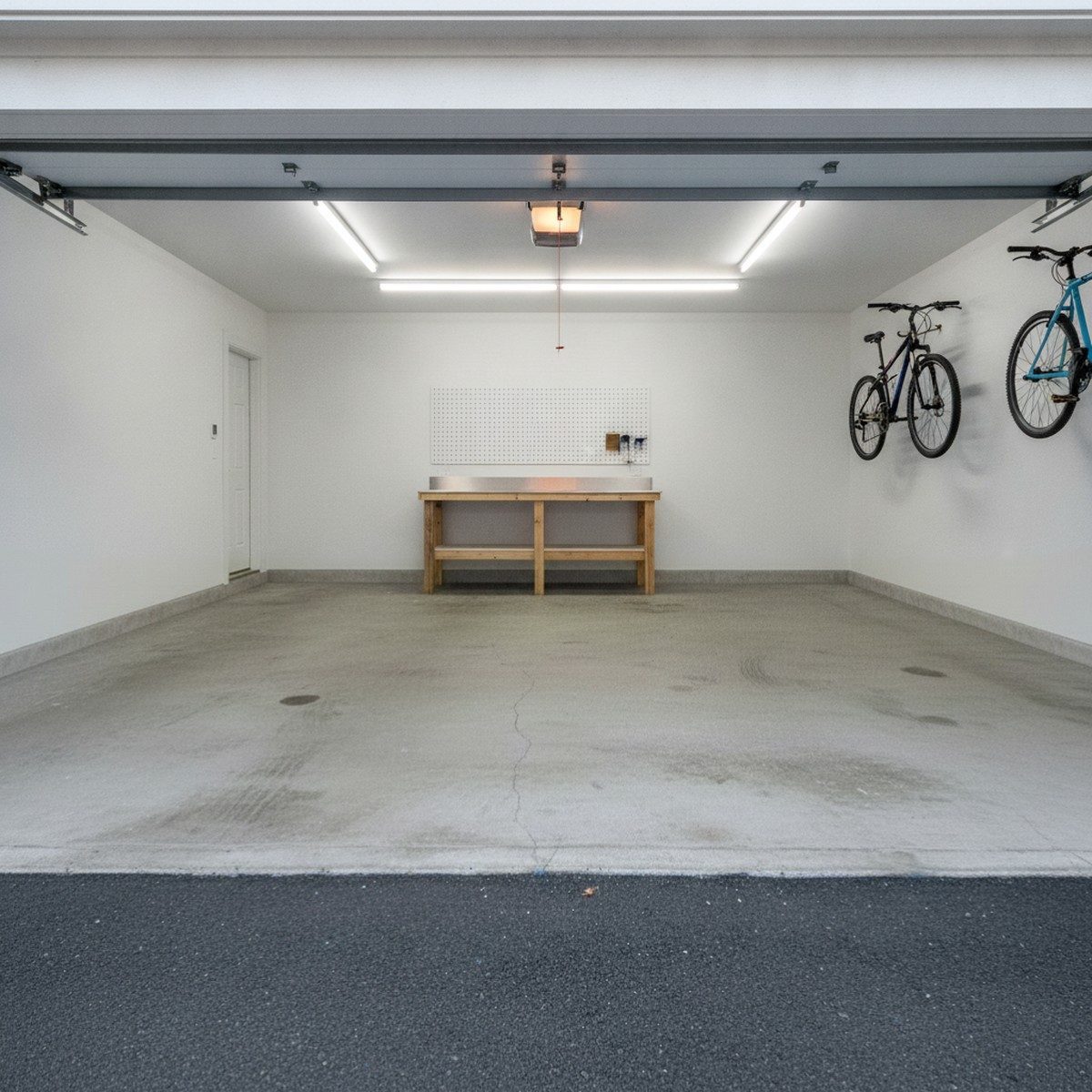
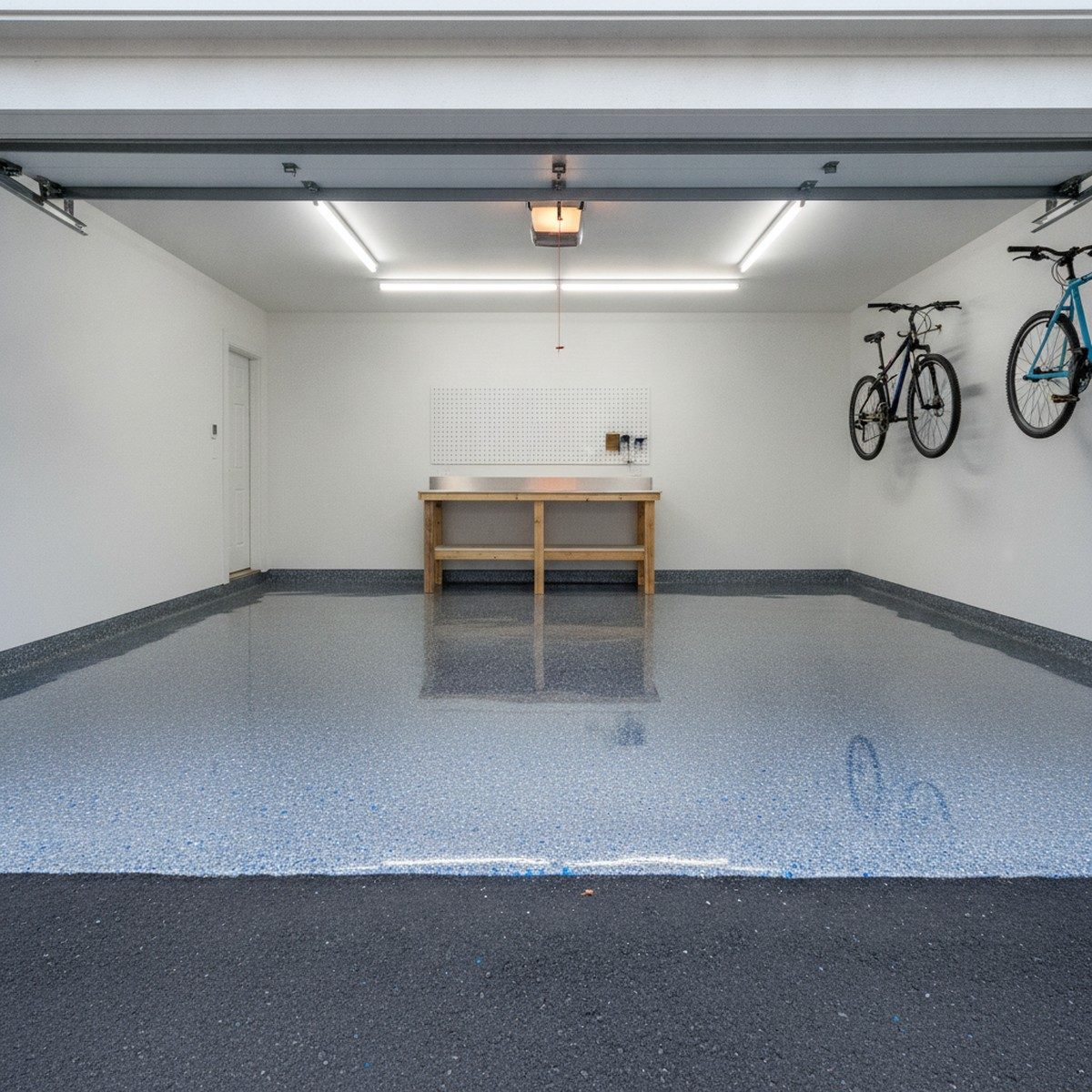
Drag to compare a bare slab against a finished commercial coating. Illustrative example.
Compare Your Options
Commercial Epoxy vs. Other Chattanooga Floors
| Factor | Commercial Epoxy | Polished Concrete | VCT / Commercial Tile |
|---|---|---|---|
| Seamless & sanitary (no grout lines) | ✓ Fully seamless | ✓ Seamless, but porous | ✗ Grout/seam joints |
| Chemical & oil resistance | ✓ Resists oil, acids, solvents | Stains without ongoing sealing | Tiles lift. Adhesive degrades |
| Forklift & heavy-load rated | ✓ High-build systems rated for heavy traffic | Surface can spall under impact | ✗ Cracks & gouges under load |
| Anti-slip options | ✓ Aggregate broadcast into topcoat | Slick when wet. Needs treatment | Varies by tile |
| Daily cleaning effort | ✓ Mop-and-go; no grout scrubbing | Low, but absorbs spills over time | Grout scrubbing & waxing |
| Install downtime | ✓ Phased section by section | Multi-day grinding & polishing | Tile-by-tile. Slow over large areas |
Get Started
Request a Free Commercial Estimate in Chattanooga
The crew will inspect your concrete, recommend the right system, and give you a firm estimate. No phone guesses, no obligation.
Get your free, no-obligation estimate
Call the crew for a free estimate. No form to fill out, no waiting.
Call (423) 805-9608Free estimate over the phone, straight answers How pricing worksWhat moves the number on your floorStandard message rates apply. No obligation.
No spam. No obligation. Your message goes straight to the local Chattanooga crew.
Planning a commercial floor in Chattanooga?
Send us a photo or a few details and we'll scope it and give you a firm estimate. No phone guesses, no obligation.
Call (423) 805-9608Common Questions
Commercial Epoxy Flooring FAQ
1. How much does commercial epoxy flooring cost?
2. What types of businesses benefit most from epoxy flooring?
3. Can you install commercial epoxy flooring without closing the business?
4. What is the difference between commercial and residential epoxy?
5. Is epoxy flooring safe for commercial kitchens and food prep areas?
6. Does commercial epoxy meet OSHA anti-slip requirements?
7. How long does a commercial epoxy job take?
8. How long after installation can the floor be used?
9. What is quartz epoxy flooring?
10. Can you coat a warehouse floor with epoxy?
11. Is epoxy flooring good for auto repair shops?
12. What maintenance does a commercial epoxy floor require?
13. Can epoxy be applied over old warehouse paint or coatings?
14. How durable is commercial epoxy under forklift traffic?
15. Can the work be scheduled around our operating hours?
16. How does commercial epoxy compare to polished concrete or VCT tile?
More Services
Explore Our Other Services
Garage Floor Epoxy
A durable, slip-resistant coating for residential and commercial garages. Flake, solid, and metallic finishes available.
View Garage Floors →Basement Epoxy Flooring
Seal and protect your basement floor with a moisture-resistant, durable epoxy system. Ideal for finished basements, workshops, and storage areas.
View Basement Floors →All Epoxy Services
See everything Chattanooga Epoxy Flooring offers, residential and commercial, decorative and industrial. Free estimates on every project.
View All Services →