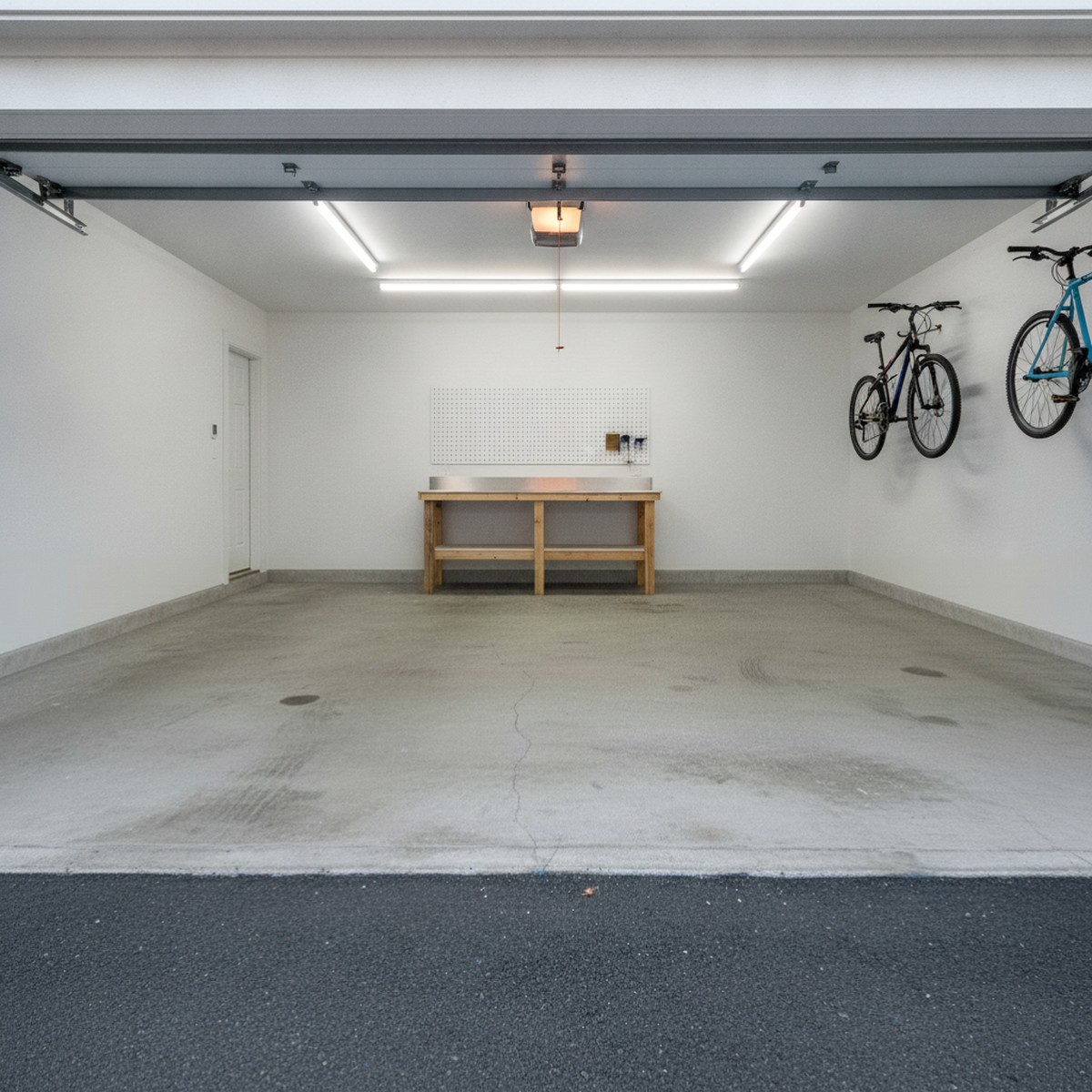
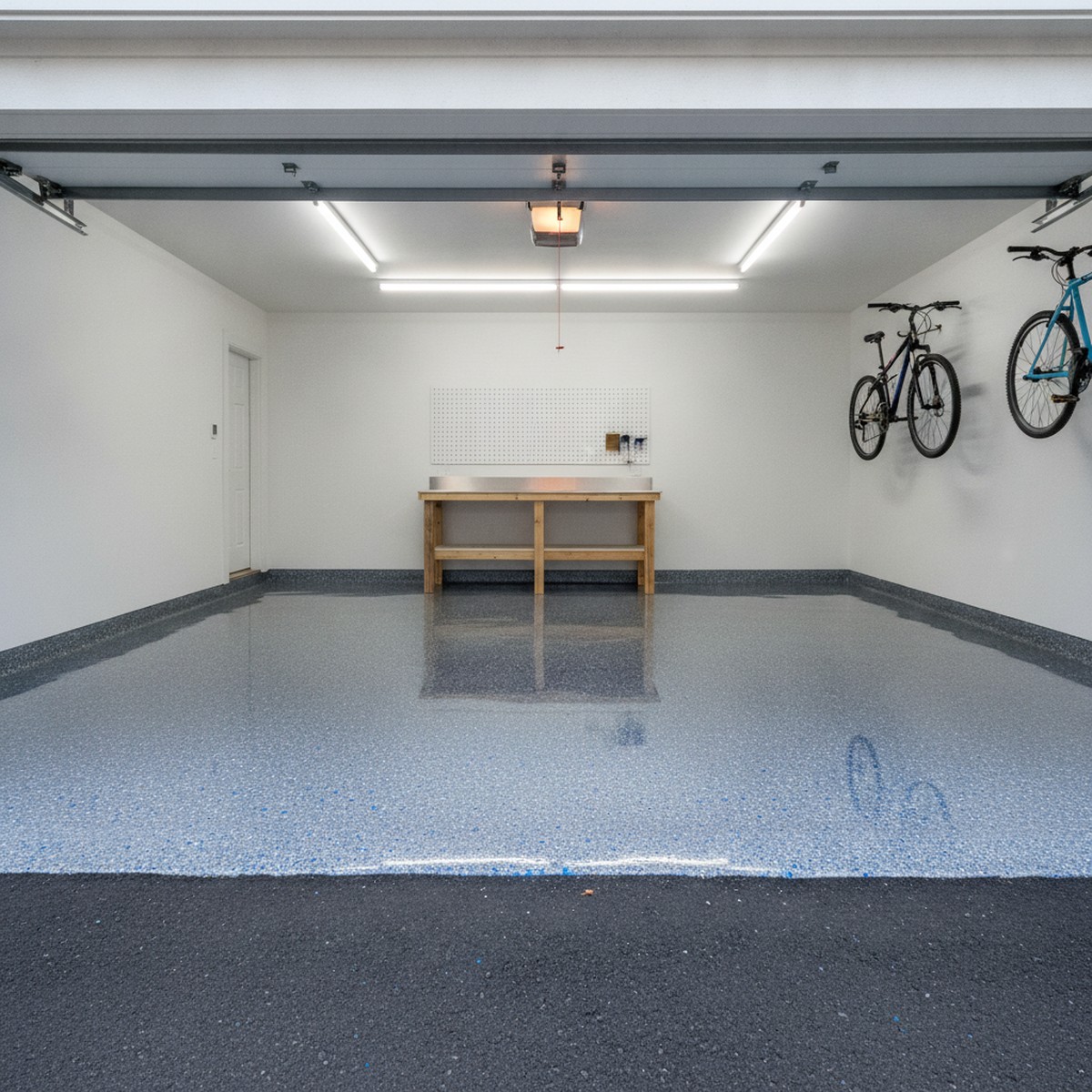
Why Chattanooga Basements Require a Specialist Approach
A basement floor in Chattanooga has one real enemy, and it is not foot traffic - it is moisture pushing up from below. That is why the slab gets moisture-tested before the job is ever priced. If your basement is a good candidate, you get a clear, itemized estimate. If it is not, you hear that instead - before you spend a dollar, and with no in-home sales pitch either way.
Basements in Chattanooga and the surrounding Tennessee Valley face a different set of challenges than basements in drier climates. The Tennessee River valley traps humidity for long stretches of the year, and summer dewpoints routinely climb into the uncomfortable range. When warm, humid air enters a cool basement, condensation forms on concrete surfaces - the slab literally sweats. That moisture does not evaporate quickly in a semi-enclosed space, and over months and years it creates conditions where standard floor coatings fail.
Tennessee's geology compounds the problem. Much of Hamilton County sits on layers of clay soil that expand when wet and contract when dry. That seasonal movement creates hydrostatic pressure below your slab: groundwater is pushed upward through hairline cracks and pores in the concrete. The result is a basement floor that may feel dry in February but shows damp patches in May. If you have noticed white powdery deposits on your basement floor - a mineral residue called efflorescence - that is a reliable sign that moisture vapor is migrating through the concrete on a regular basis.
None of this makes your basement uncoatable. It means the job has to be done correctly, starting with a proper moisture assessment. A sound basement epoxy process begins with testing - not guessing.
Moisture Testing: The Step That Determines Everything
Skipping moisture testing is the single most common reason basement epoxy fails. In plain terms, the concrete needs to be confirmed capable of holding epoxy before it is coated, because no coating sticks to a slab that is pushing moisture up through it. Two methods are commonly used on a basement slab. The first is the plastic sheet test: a section of 4-mil poly sheeting is taped flat to the slab and left for 24 to 72 hours. Condensation on the underside of the sheet reveals vapor moving upward through the concrete. This is a fast, inexpensive first screen.
For a more precise measurement, a calcium chloride emission test is used. An absorbent dish of anhydrous calcium chloride is sealed under a plastic dome on the bare slab for 60-72 hours. The dish is then weighed, and the weight gain reveals the exact moisture vapor emission rate (MVER) in pounds per 1,000 square feet per 24 hours. In plain terms: epoxy manufacturers set a maximum safe moisture level for their products. If your Chattanooga slab is pushing up more vapor than that, a normal epoxy floor will fail no matter who installs it.
What this means for your basement:
- A system that's doomed to peel in Chattanooga's humidity shouldn't go down in the first place.
- You'll know exactly what your slab can handle before you spend a dollar.
- If moisture levels are too high, the right move is to weigh the options - a moisture-mitigating primer or fixing drainage first - instead of rushing a quick sale.
When MVER falls within the acceptable range, the project can move forward with confidence. When it exceeds the threshold, the honest path is to weigh the options: a moisture-mitigating primer system rated for higher vapor drive, or addressing the drainage issue before coating. A floor that is going to peel in 18 months isn't worth selling.
When Epoxy Works for Basements - and When It Does Not
Epoxy flooring is an excellent solution for basements that have vapor drive within normal limits, no active water intrusion through wall-floor joints or cracks, and a structurally sound slab. It seals the surface, blocks minor vapor transmission, and creates a coating that is impervious to oil, cleaning chemicals, and tracked-in moisture. The finished floor is dramatically easier to clean than bare concrete.
Epoxy is not a moisture barrier, and we say this plainly to every customer. If your basement takes on standing water after heavy rain, the water is entering through a gap, crack, or drainage failure that no floor coating will fix. Painting over a wet basement is a recipe for bubbling and delamination within one season. If you have active water intrusion, the responsible path is to address the source first. A French drain system, sump pump upgrade, or crack injection, and then coat the floor once the slab is consistently dry. We are happy to refer you to a contractor who handles water intrusion and schedule the epoxy work afterward.
Basement Use Cases: Matching the Right System to Your Space
Not every basement is the same, and the epoxy system that makes sense for a finished rec room is different from the right choice for a utility workshop. We work through the intended use with every customer before making a recommendation.
Finished Living Space
A metallic epoxy system delivers a polished, high-end look with swirling depth that reads like polished stone. Warm the space with proper lighting and it no longer feels like a basement.
Home Gym
A flake or chip broadcast system gives you a slip-resistant, rubber-friendly surface that holds up under dropped weights and heavy foot traffic. Easy to hose down after a hard session.
Home Office
Solid-color or metallic epoxy with a satin topcoat creates a professional look that holds up under chair casters and stays clean with a dry mop.
Workshop
A full-flake broadcast with a heavy polyaspartic topcoat resists chemicals, abrasion, and rolling tool chests. Chip colors can be mixed to your preference.
Utility or Storage
A single-coat solid epoxy or polyurea keeps dust down, makes spills visible, and holds up to shelving, freezers, and seasonal storage with minimal maintenance.
Metallic Epoxy for Basement Living Spaces
For finished basements, the system people ask about most is metallic epoxy. The metallic pigment system uses suspended pearlescent particles that catch and reflect light differently depending on angle and movement - the floor shifts appearance as you walk across it. No two metallic floors are identical, which makes it one of the few flooring options that functions as a genuine design statement rather than a commodity surface.
For a basement that serves as a media room, bar, playroom, or guest suite, metallic epoxy changes what the room feels like. The high-gloss topcoat reflects ambient light, which helps counter the low-ceiling, low-window challenge that most basements share. A dark charcoal metallic floor with warm overhead lighting can make a space feel sophisticated rather than subterranean. We offer a range of color combinations and can mix custom blends for clients who want something specific.
Flake Systems for Workshop and Utility Spaces
For basements that need to work harder - shops, mechanical rooms, laundry and utility areas - the broadcast flake system is the better call. Color chips are scattered into the base coat at full broadcast density, then locked in under a clear polyaspartic topcoat rated for heavy use. The textured surface provides natural grip even when wet, and the aggregate texture hides minor scuffs and wear better than a smooth solid-color coat. Chemical resistance on a quality polyaspartic topcoat is exceptional - gasoline, hydraulic fluid, bleach, and most solvents wipe up without staining.
What Basement Epoxy Costs in Chattanooga
A Note on Radon Mitigation and Epoxy
A question that comes up often in the Tennessee Valley: will an epoxy floor help with radon? The answer deserves a straight response: epoxy is not a radon barrier. Radon is a gas that moves through pores and micro-cracks in concrete, and while epoxy does seal the surface to some degree, it does not meet the performance threshold required to meaningfully reduce radon levels. If your basement has tested above 4 pCi/L, the EPA's recommended action level, please contact a qualified radon mitigation contractor. Sub-slab depressurization - the standard solution - involves routing a pipe through the slab to an exterior fan. Epoxy flooring can be installed over a properly executed radon system without conflict, and it will actually make the patched penetration easier to keep clean. We simply want customers to have accurate expectations before the job begins.
Why Basement Prep Is More Critical Than Garage Prep
Surface preparation always matters in epoxy work, but it matters even more in a basement. Garage slabs are typically poured on compacted gravel with some air circulation around the perimeter. Basement slabs are poured below grade, surrounded on three sides by soil that holds moisture year-round. The concrete is almost always denser and smoother from the original pour, which means adhesion is harder to achieve without aggressive mechanical prep.
Diamond-head grinding equipment opens the surface profile of basement concrete to a CSP-3 standard - the level most epoxy manufacturers require for a long-lasting installation. In plain terms: the surface is roughened just enough so the coating can bite in and stay put for years. The slab is then vacuumed thoroughly, cracks and divots are filled with an appropriate filler, and a penetrating primer coat is applied before the base coat goes down. On basement jobs, the prep phase can take as long as the coating phase. That is not inefficiency - it is the correct way to build a floor that will still look good five years from now.
If you have a basement floor that has been painted before, we need to know. Old paint that has not fully adhered will lift with the new coating on top of it. We test adhesion, grind back failing areas, and in some cases fully remove the old coating before proceeding. It adds time to the job, but it saves you from a callback situation down the road.
The end result is worth the investment. A properly installed basement epoxy floor turns what is often the least-used, least-liked space in a home into a room that is bright, clean, easy to maintain, and genuinely enjoyable to spend time in. We serve homeowners and businesses across Chattanooga, Hixson, East Brainerd, and the greater Hamilton County area.
Why Chattanooga Homeowners Choose Our Basement Epoxy
Moisture Tested First
A basement floor should be checked with two moisture tests - not guesswork. If conditions are wrong for epoxy, you should hear it before you spend a dollar.
Systems Matched To Use
Living space, gym, office, workshop, or storage - we recommend the system built for how you'll actually use the room.
Specified For The Tennessee Valley
Floors designed around Chattanooga's humidity and Hamilton County's clay soils, not a generic spec sheet from a drier climate.
Clear, Itemized Estimates
You see prep, materials, and options in writing before we start - no surprise add-ons on installation day.
Wondering if your basement slab is a good candidate?
Send us a photo and we'll tell you straight, before you spend a dollar. Free, no-pressure estimate.
Call (423) 808-2906 Text a photo of your floorBasement Epoxy vs. Floor Paint vs. Doing Nothing in Chattanooga
In a humid Chattanooga basement, how the floor handles moisture is what separates a coating that lasts from one that peels in a season. Here is how a professionally prepped epoxy system compares to the common alternatives.
| What matters in a Chattanooga basement | Professional Epoxy System | DIY Floor Paint / Box-Store Kit | Bare Concrete (Doing Nothing) |
|---|---|---|---|
| Moisture & vapor tested before coating | ✓ Plastic-sheet + calcium chloride testing | ✗ Rarely tested - coated on a hope | N/A - slab left to sweat and stain |
| Handles high moisture / efflorescence | ✓ Moisture-mitigating primer when MVER is high | ✗ Bubbles and lifts when vapor pushes up | ✗ White powder and damp patches persist |
| Surface prep / adhesion | ✓ Diamond-ground to CSP-3 profile | Light etch or none - weak bond | Dusty, porous, hard to clean |
| Expected lifespan | ✓ Backed by a Limited Lifetime Warranty | Often 1-3 years before peeling | Degrades and dusts indefinitely |
| Brightness & cleanability | ✓ Seamless, light-reflecting, mops clean | Flat finish, scuffs and stains | ✗ Stains, dust, hard to keep clean |
| Honest go / no-go before you pay | ✓ Go/no-go call made before coating | ✗ No way to know until it lifts | N/A |
Tell the crew about your basement and they'll schedule a quick on-site visit in Chattanooga, Hixson, or East Brainerd. You get a no-pressure, itemized estimate from the local crew. No spam, no mailing lists, no in-home sales pitch.
Get your free, no-obligation estimate
Call the crew, or text a photo of your basement - mention any damp spots you have seen - so your price is ready when you call. No form to fill out.
Call (423) 808-2906Free estimate over the phone, real person Text a photo for a fast estimateSend a photo so your price is ready when you call See your price30-second calculator on the home pageStandard message rates apply. No obligation.
Is epoxy flooring good for basements?
Will epoxy seal out basement moisture?
What if my basement has active water leaks?
Can a damp basement be coated with epoxy?
What does the white powder on my Chattanooga basement floor mean?
Should I just use a DIY epoxy kit on my basement floor?
How much does basement epoxy flooring cost in Chattanooga?
What is the most popular finish for basement epoxy?
Can you install epoxy over a painted basement floor?
How do you prepare a basement floor for epoxy?
Is epoxy flooring good for a basement home gym?
How long does basement epoxy installation take?
How soon can I use the basement after epoxy installation?
Does basement epoxy peel or bubble?
Is basement epoxy flooring slippery?
Will epoxy flooring make my basement brighter?
How should I choose epoxy system for a finished basement?
How long does basement epoxy flooring last?
The most popular epoxy application: a garage floor with a durable, professional finish that shrugs off vehicles, chemicals, and heavy use.
Industrial and commercial epoxy systems for warehouses, retail spaces, restaurants, and medical facilities throughout Hamilton County.
Serving homeowners and businesses in Hixson with the same prep standards and systems we use across Chattanooga.
East Brainerd's newer subdivisions are prime candidates for basement, garage, and commercial epoxy work.
Ready to talk specifics? Reach out and we will schedule a no-pressure site visit and written estimate for your project.
View our full service list, see completed projects, and learn why Chattanooga homeowners and businesses trust us with their floors.